

Technical resource
Polycarbonate Resin: A Technical Buyer's Guide to Grades, Verification, and Supplier Selection
A technical procurement guide to polycarbonate resin: how grade viscosity and additives map to part requirements, which properties to verify with data, and how to assess a PC material supplier.
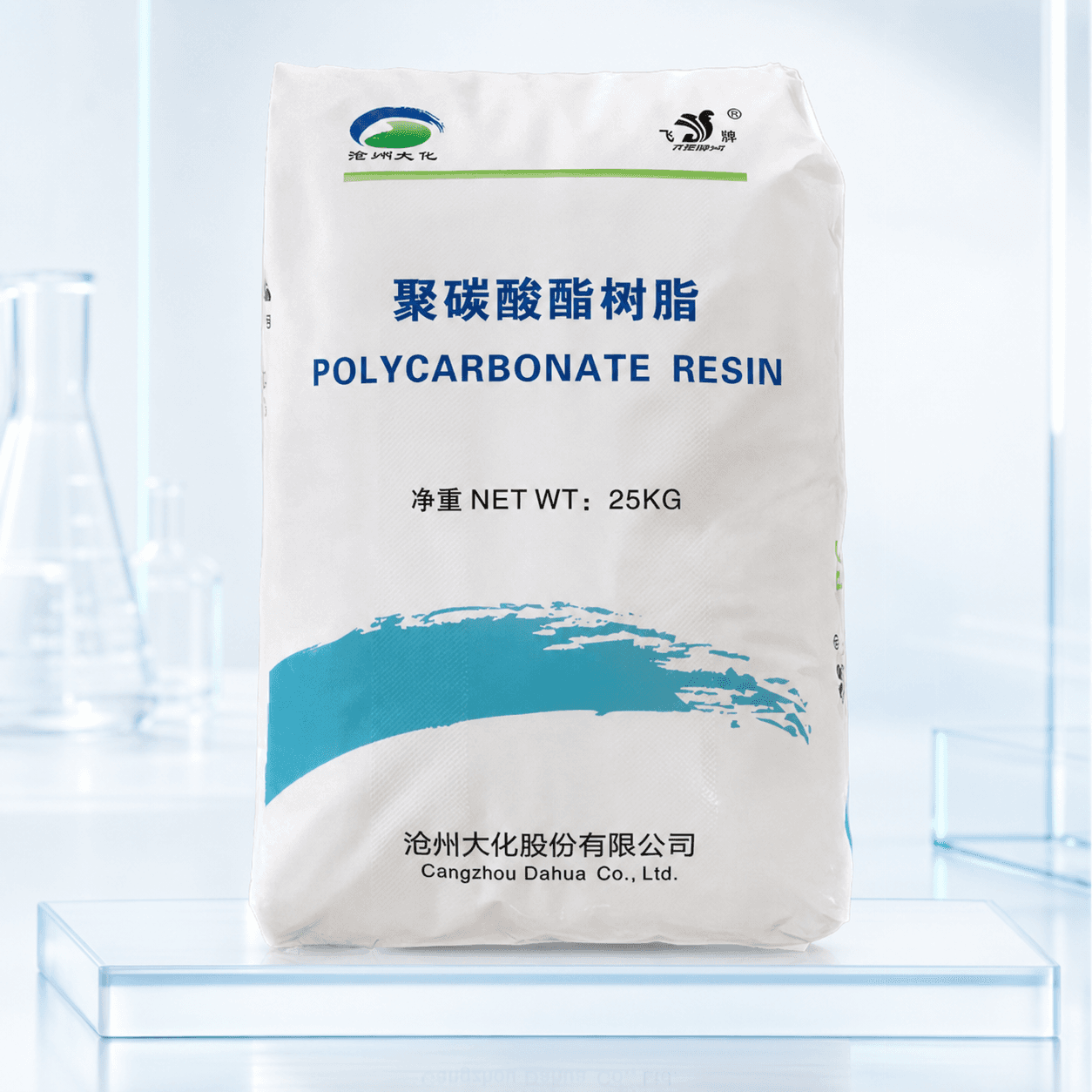
What Polycarbonate Resin Is and Where It Fits
Polycarbonate (PC) is an amorphous engineering thermoplastic built on carbonate linkages in its polymer backbone. That chemistry produces three properties buyers usually care about first: high optical clarity, high notched impact strength, and useful stiffness across a broad temperature range. PC also accepts common additives, including UV stabilizers and mold-release agents, which is why a single polymer family can serve lighting lenses, electrical housings, automotive interior parts, and thin-wall connectors.
The practical consequence for procurement is that "polycarbonate resin" is not one material. Melt viscosity, additive package, and color/transparency vary by grade, and those differences change how a part fills, how it releases from the mold, and how it survives outdoor exposure. A grade that solves a thin-wall filling problem may be the wrong choice for a thick, transparent part that needs low residual stress.
This guide is written for engineers and technical buyers evaluating PC resin. It explains the mechanism behind grade selection, the measurable factors to request, and the verification steps that separate a data-backed offer from a generic one.
How Melt Viscosity Drives Grade Selection
Melt volume-flow rate (MVR) is the usual shorthand for PC viscosity, and it is the single most useful number when matching a grade to a mold. Higher MVR means lower viscosity and easier flow into thin walls and long flow paths; lower MVR means higher melt strength, which generally suits thicker sections and helps avoid the unstable flow that can produce cosmetic or structural defects.
Supplied grade data illustrates the range. PAIYI Polycarbonate Resin 2405 is listed with MVR 19 and is positioned as a low-viscosity, high-flow grade for thin-wall and complex components, including precision connectors. PAIYI Polycarbonate Resin 2407 shares the MVR 19 flow level but adds UV stabilization for outdoor lamp covers and security camera housings. PAIYI Polycarbonate Resin 2805 is a medium-viscosity general-purpose grade with MVR 9.0, high transparency, and easy release, aimed at electronic housings and automotive interior transparent parts.
Treat these figures as a starting screen, not a final decision. MVR is measured under specified temperature and load conditions, so compare values only when the test conditions match. Ask the supplier for the test standard and conditions behind any MVR number, and for a lot-specific certificate rather than a marketing figure.
Thin-wall and complex-flow parts
When wall thickness drops or flow length rises, the melt front cools quickly and pressure demand climbs. A high-flow grade such as MVR 19 reduces the injection pressure needed to fill, which can shorten the molding cycle and lower the risk of short shots. The trade-off is that high flow can increase the tendency toward flash at poorly sealed parting lines and can make process control more sensitive to small temperature changes. Validate on the actual mold before committing to volume.
Thick sections and transparent parts
Thicker sections and highly transparent parts usually benefit from a lower-flow, higher-viscosity grade. Slower, more stable filling helps reduce flow marks and frozen-in orientation that can show up as optical distortion or internal stress. A medium-viscosity grade like MVR 9.0 is a reasonable starting point for electronic housings and transparent automotive interior parts, but optical requirements should be defined numerically (haze, light transmission, or a visual standard) before sampling.
Additives and Property Trade-offs
Base PC already offers high impact resistance and clarity, but real parts often need more. The additive package is where many purchasing mistakes hide, because two grades with the same MVR can behave very differently outdoors or in a mold.
- UV stabilization. Unstabilized PC can yellow and lose impact strength under prolonged outdoor exposure. A UV-stabilized grade such as PAIYI 2407 is intended for outdoor lamp covers and camera housings. Stabilization slows degradation; it does not make the part immune to weathering, so define the expected service life and exposure conditions and ask for supporting weathering data.
- Mold release. Easy-release additives reduce ejection force and can shorten cycles, which matters for parts with deep cores or tight tolerances. The trade-off is that release agents can affect secondary operations such as painting, printing, or bonding. If the part will be decorated or assembled with adhesives, confirm compatibility with the specific grade.
- Transparency. High-transparency grades are formulated to minimize haze, but optical quality also depends on drying, melt temperature, and mold surface. A clear resin can still produce hazy parts if it is processed wet.
Properties Buyers Should Verify, Not Assume
Polycarbonate datasheets commonly report mechanical, thermal, and optical properties, but the values are only meaningful when the test method, specimen condition, and lot are known. The table below separates what to ask for from why it matters in a purchasing decision.
| Property | What to request | Why it affects the purchase decision |
|---|---|---|
| Melt volume-flow rate (MVR) | Value, test standard, temperature, and load | Confirms the grade can fill the intended wall thickness and supports cycle-time estimates |
| Notched impact strength | Test method, specimen type, and temperature | Indicates whether the part will survive drops or assembly loads; PC is chosen for toughness, so verify it |
| Light transmission and haze | Measured values on defined thickness | Sets whether the grade meets optical requirements for lenses, covers, or transparent housings |
| UV/weathering performance | Accelerated or outdoor exposure data with duration and conditions | Supports claims for outdoor lamp covers and camera housings; without data, outdoor life is unproven |
| Drying and processing window | Recommended moisture level, drying temperature, and melt temperature range | PC is moisture-sensitive; wrong drying causes splay, haze, and reduced impact strength |
| Lot certificate of analysis | Actual measured values for the delivered lot | Confirms consistency between the sample you approved and the production shipment |
If a supplier cannot provide lot-level data for critical properties, treat the grade as unverified for that application. This is especially important for regulated sectors such as medical or automotive, where additional documentation may be required beyond a standard datasheet.
Common Failure Modes and How to Catch Them Early
Most PC part failures trace back to processing or grade mismatch rather than the polymer itself. Knowing the failure modes helps you write better sample-approval criteria.
- Hydrolytic degradation from poor drying. PC absorbs moisture, and processing it wet breaks down the polymer. Symptoms include splay marks, haze, and lower impact strength. Verify the supplier's recommended drying conditions and measure moisture before molding.
- Short shots and high fill pressure. Usually a sign the grade is too low-flow for the wall thickness or flow length. Before switching to a higher-MVR grade, check gate design, wall uniformity, and melt temperature.
- Flash and overpacking. High-flow grades can flash at worn or poorly sealed parting lines. If flash appears after a grade change, inspect tool condition before blaming the resin.
- Yellowing outdoors. Unstabilized or under-stabilized PC yellows under UV. Specify a UV-stabilized grade for outdoor parts and request weathering data rather than relying on the label alone.
- Stress cracking. Molded-in stress plus chemical exposure can cause crazing or cracking. Medium-viscosity grades and careful packing reduce stress, but chemical compatibility with cleaners and assembly fluids should be checked separately.
How to Evaluate a PC Material Supplier
Supplier evaluation should focus on what can be documented and repeated, not on catalog breadth. A useful sequence is to define the part requirement, request grade-specific data, sample the grade on production tooling, and then lock in incoming inspection.
- Define the requirement in numbers. Wall thickness, flow length, optical targets, outdoor exposure, and impact criteria should be written down before contacting suppliers.
- Request grade-specific documentation. Ask for the datasheet with test methods, a lot certificate of analysis, processing guidance, and any weathering or regulatory documents relevant to your market.
- Sample on the real mold. Pilot runs reveal filling, release, warpage, and optical behavior that datasheets cannot predict. Record the process window that produces acceptable parts.
- Agree on incoming inspection. Specify which properties are checked per lot, the sampling method, and the acceptance limits. MVR and moisture are common first checks because they are fast and predict processing behavior.
- Confirm supply continuity. Ask how grades are stocked, how lot traceability works, and what happens if a grade is discontinued. Engineering plastics buyers should know whether an alternative grade has been validated before they need it.
PAIYI supplies polycarbonate and engineering plastic grades for automotive, lighting, electrical, medical, appliance, and industrial applications. Buyers evaluating PAIYI should still apply the same verification steps: match the grade to the part, request lot data, and validate on production tooling.
Decision Rules for Choosing Among PC Grades
When several grades look plausible, use these rules to narrow the field:
- If the wall is thin or the flow path is long and the mold is already built, start with a high-flow grade such as MVR 19 and confirm with a short-shot study.
- If the part is transparent and thick, favor a medium-viscosity grade and define optical acceptance criteria before sampling.
- If the part sees sunlight, require UV stabilization and request weathering evidence; do not assume a general-purpose grade will last outdoors.
- If the part will be painted, printed, or bonded, check that the release package is compatible with those operations.
- If the application is regulated, confirm documentation availability before qualification, not after.
The cost of a wrong grade rarely shows up on the resin invoice. It shows up in scrap, rework, tool modifications, and delayed launches. A short verification program is usually cheaper than a production trial by failure.